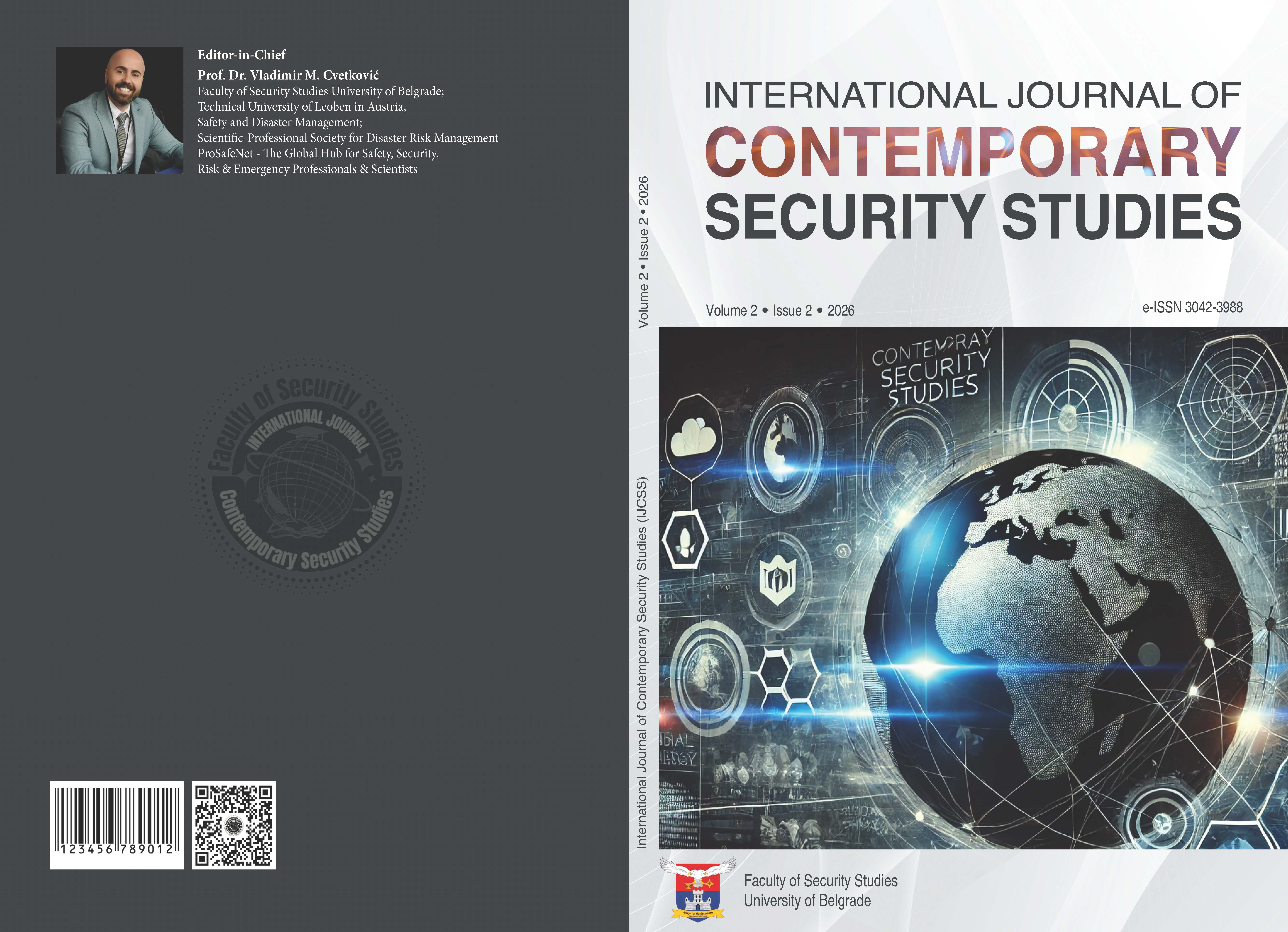
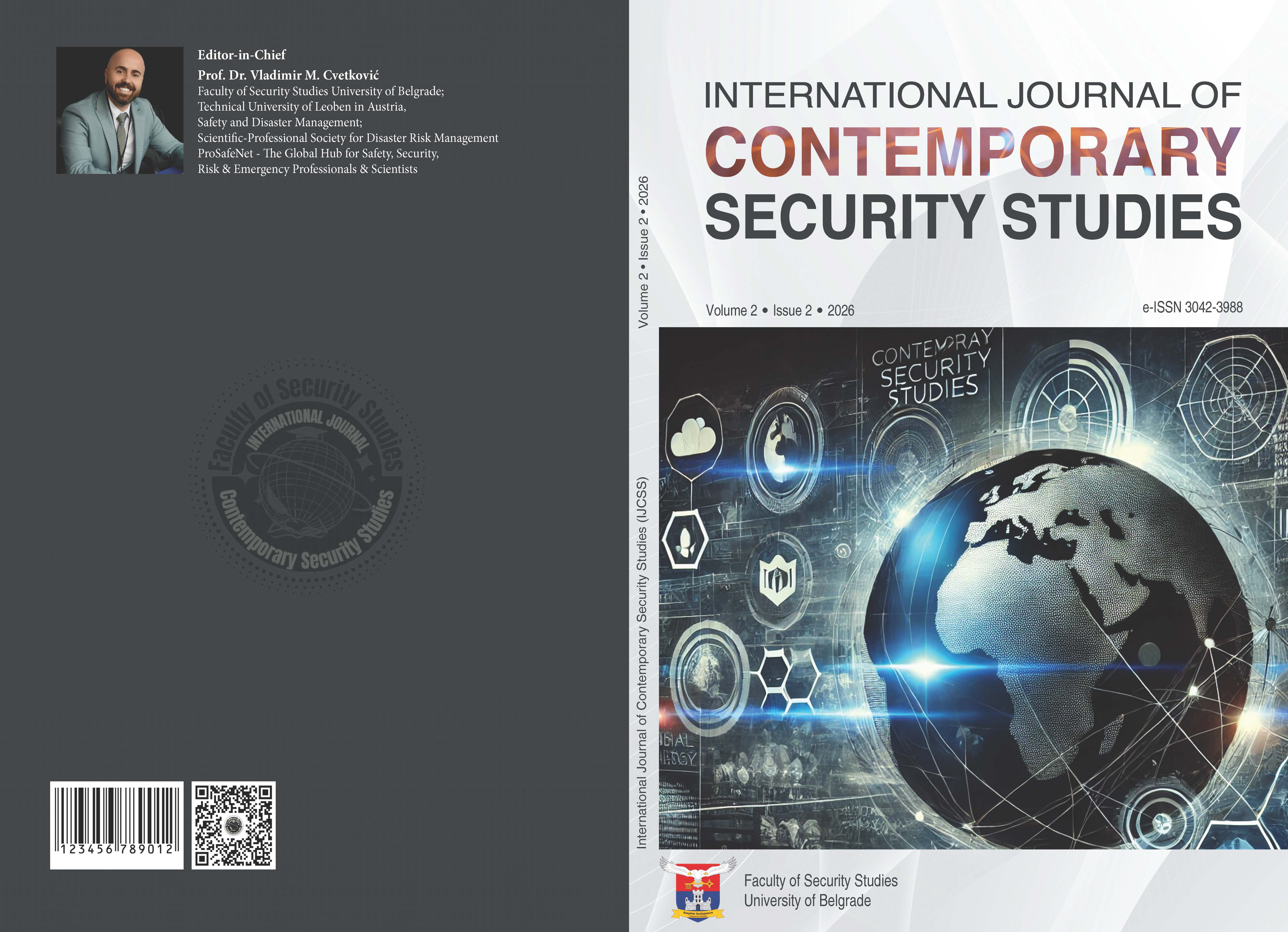
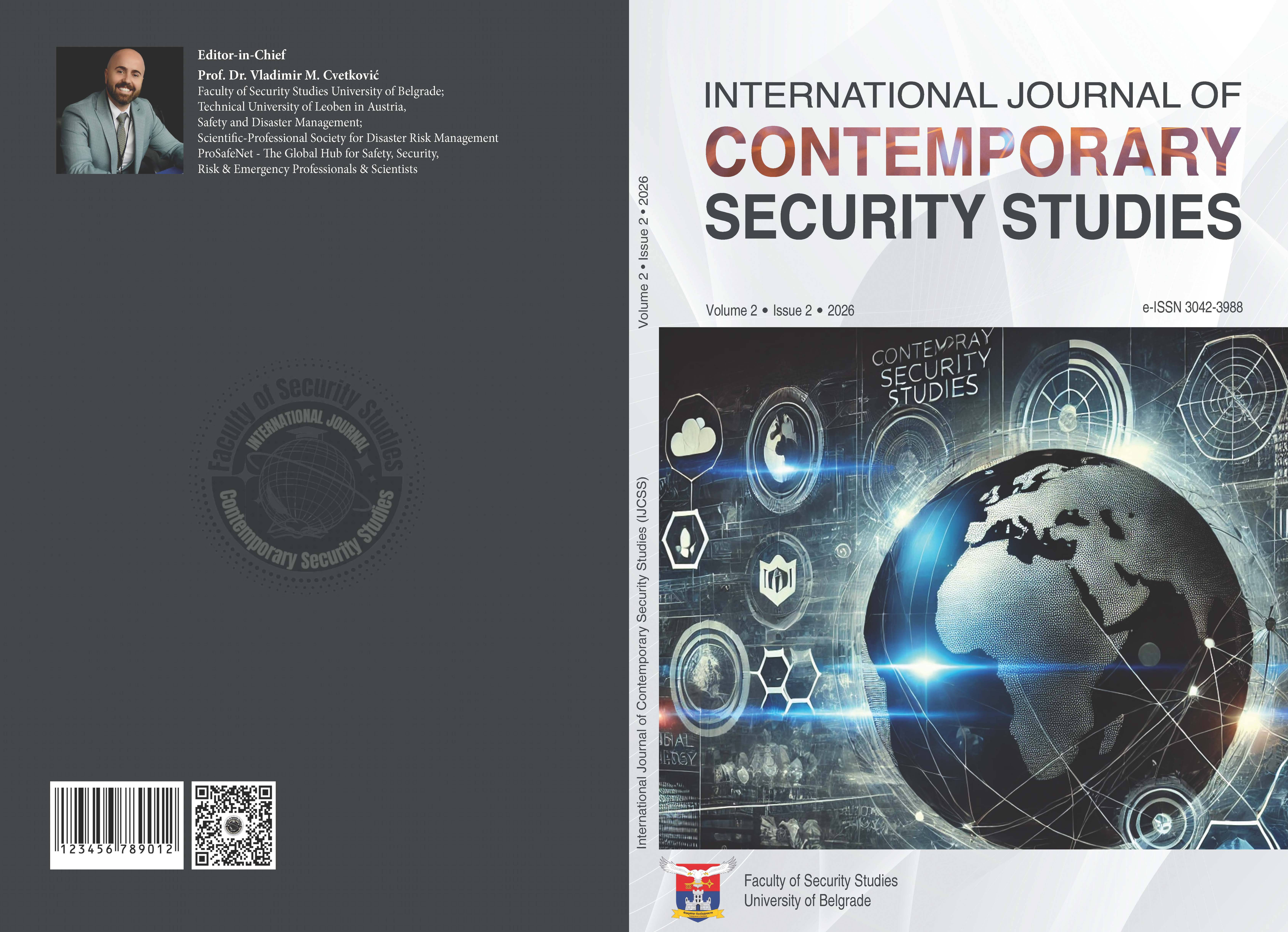
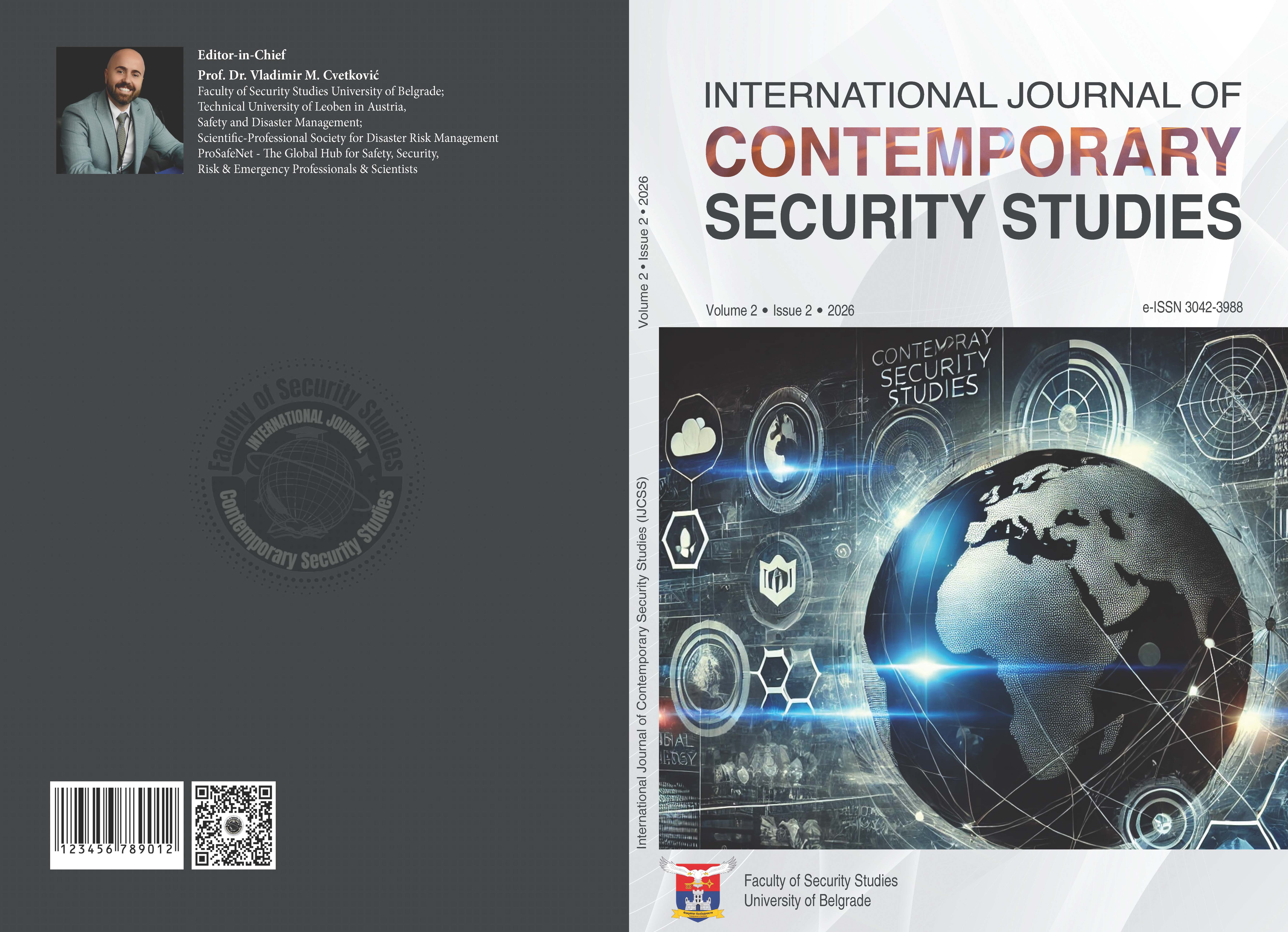
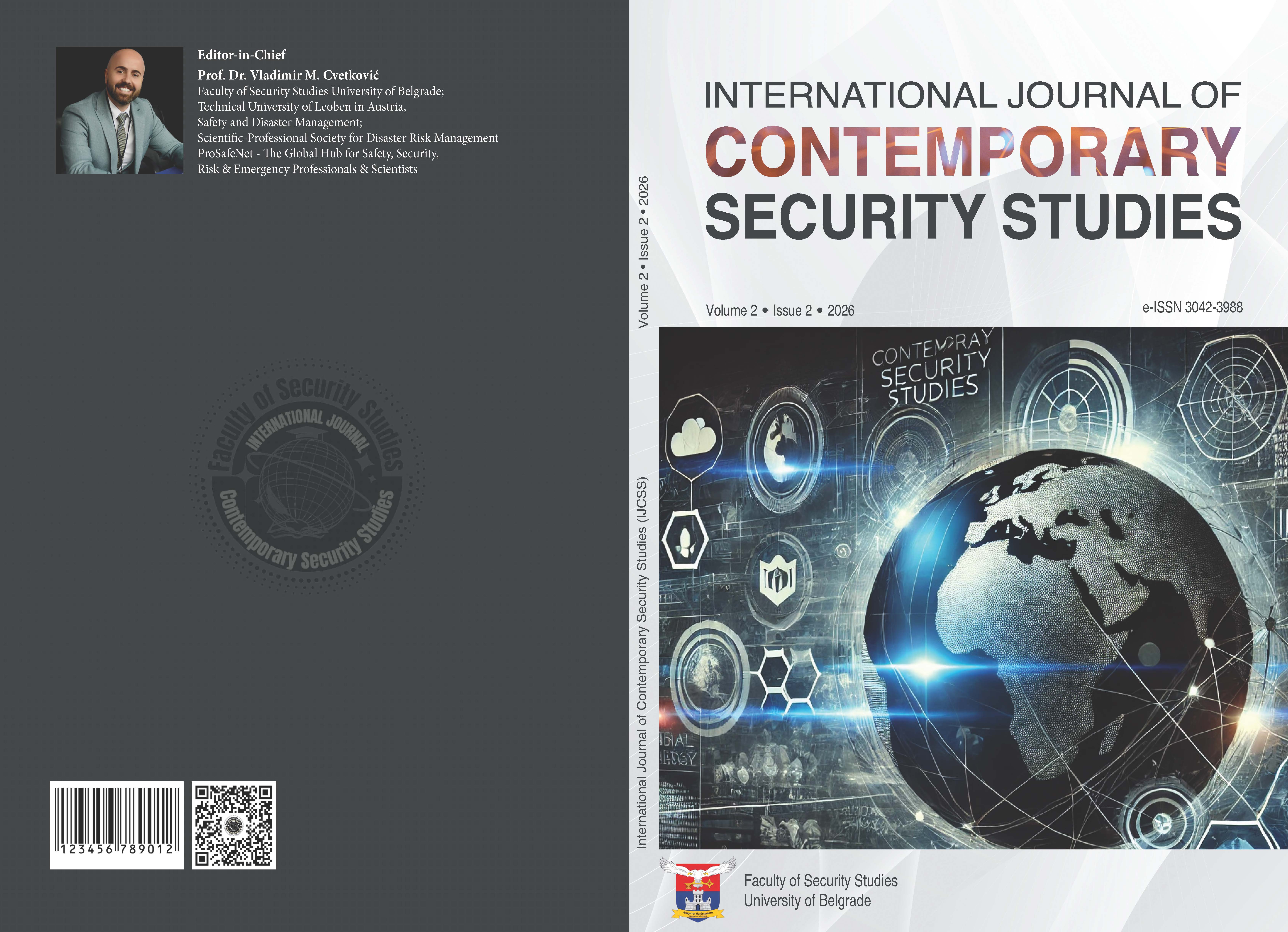
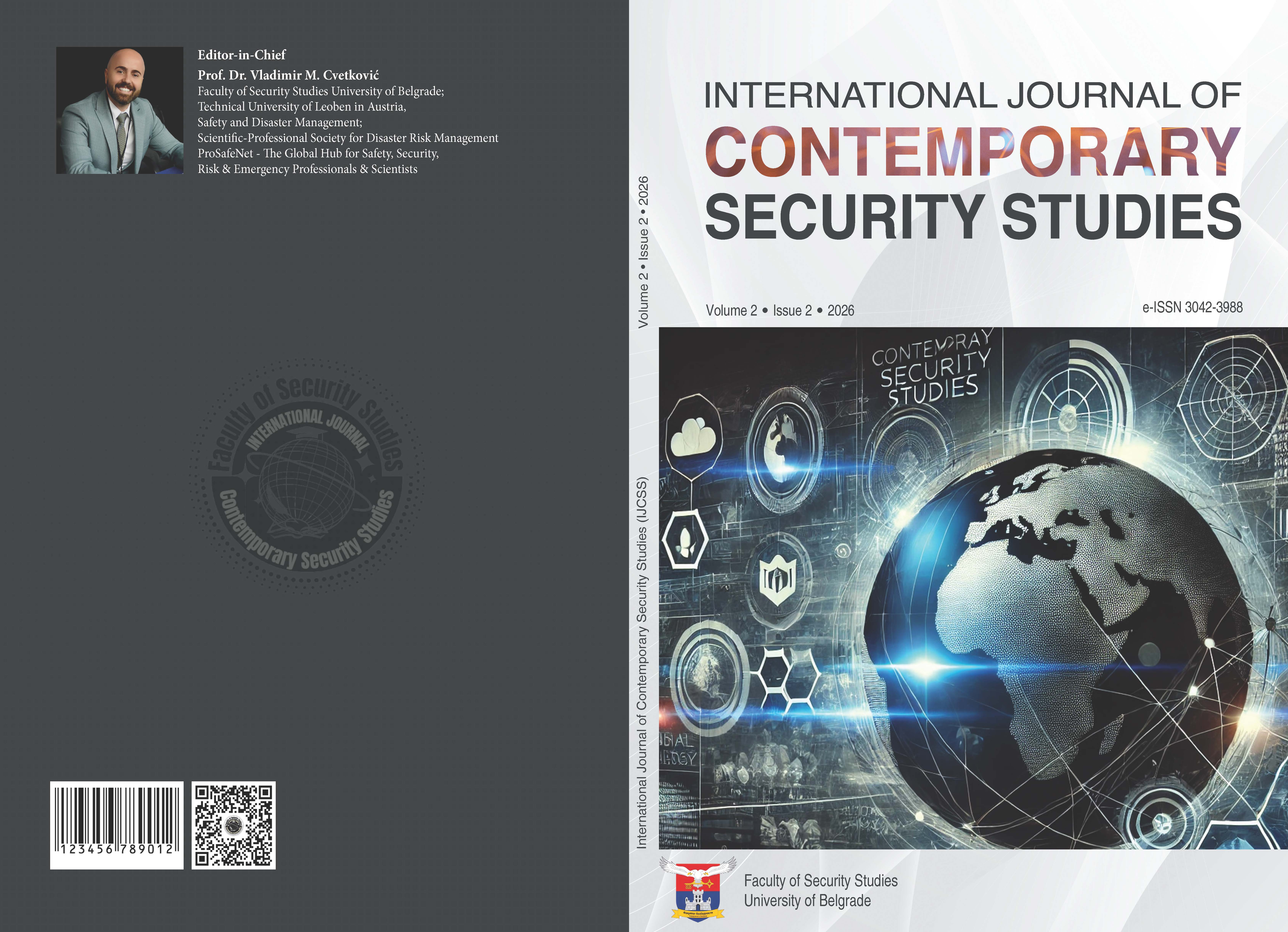
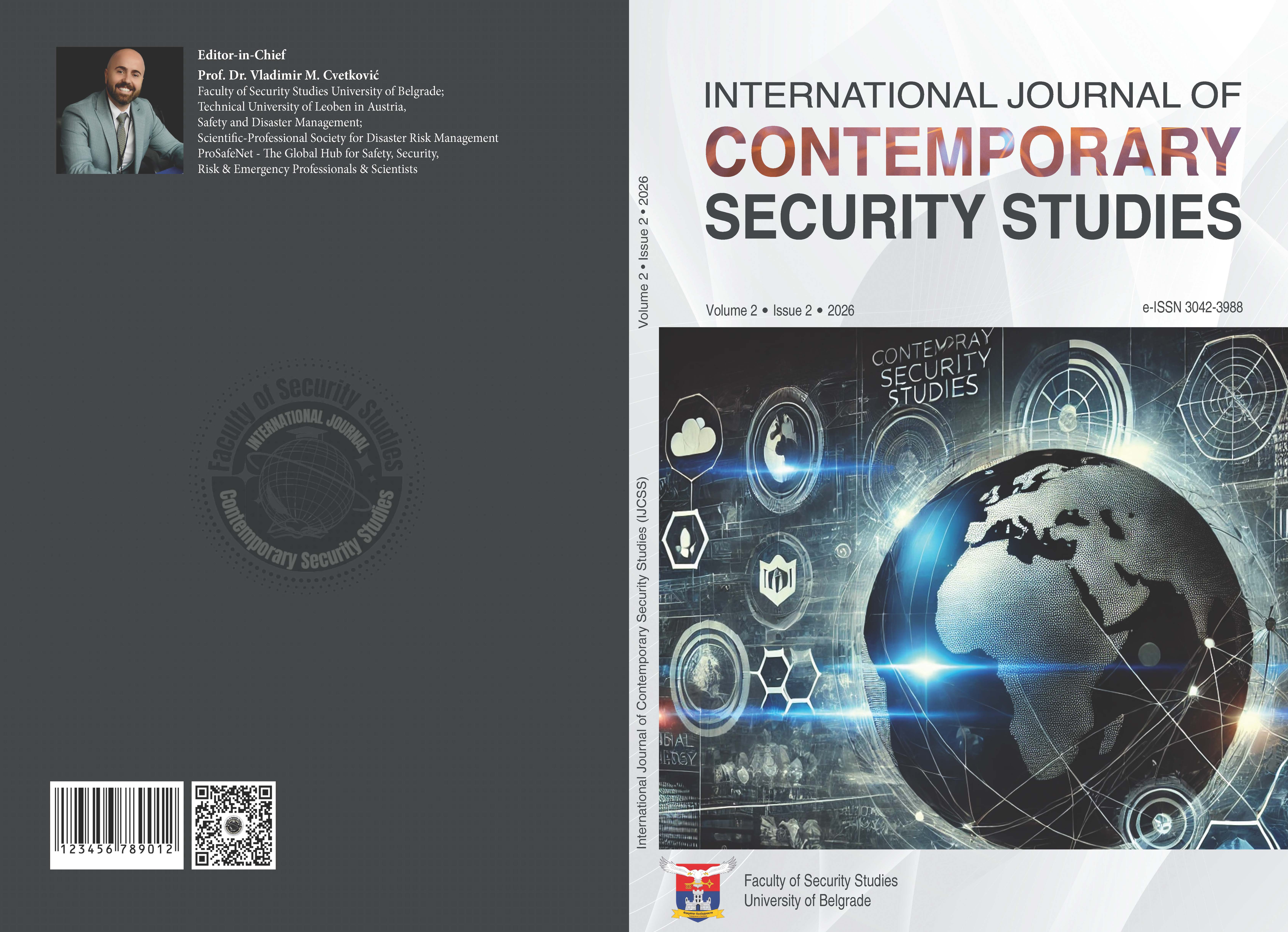
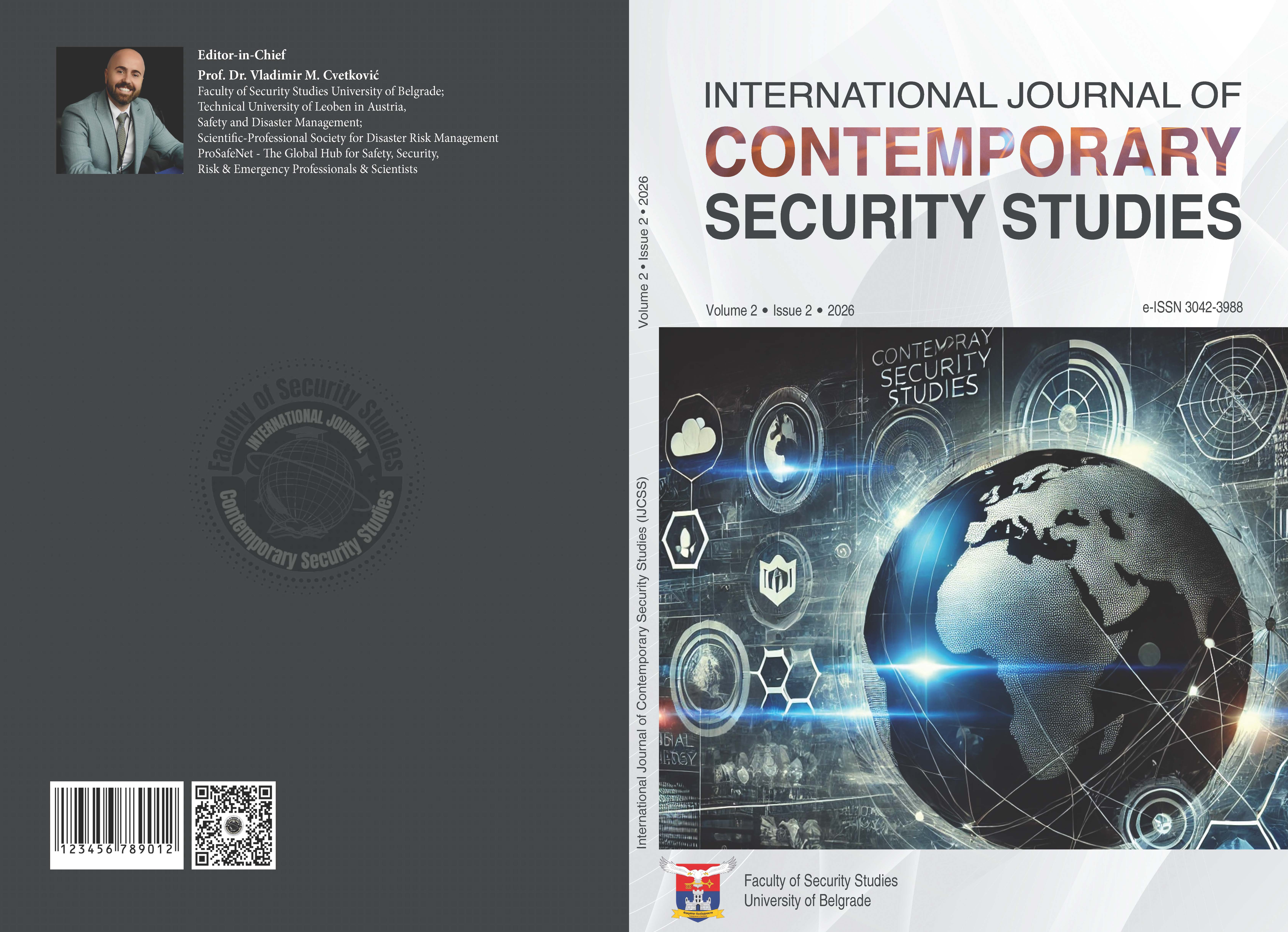
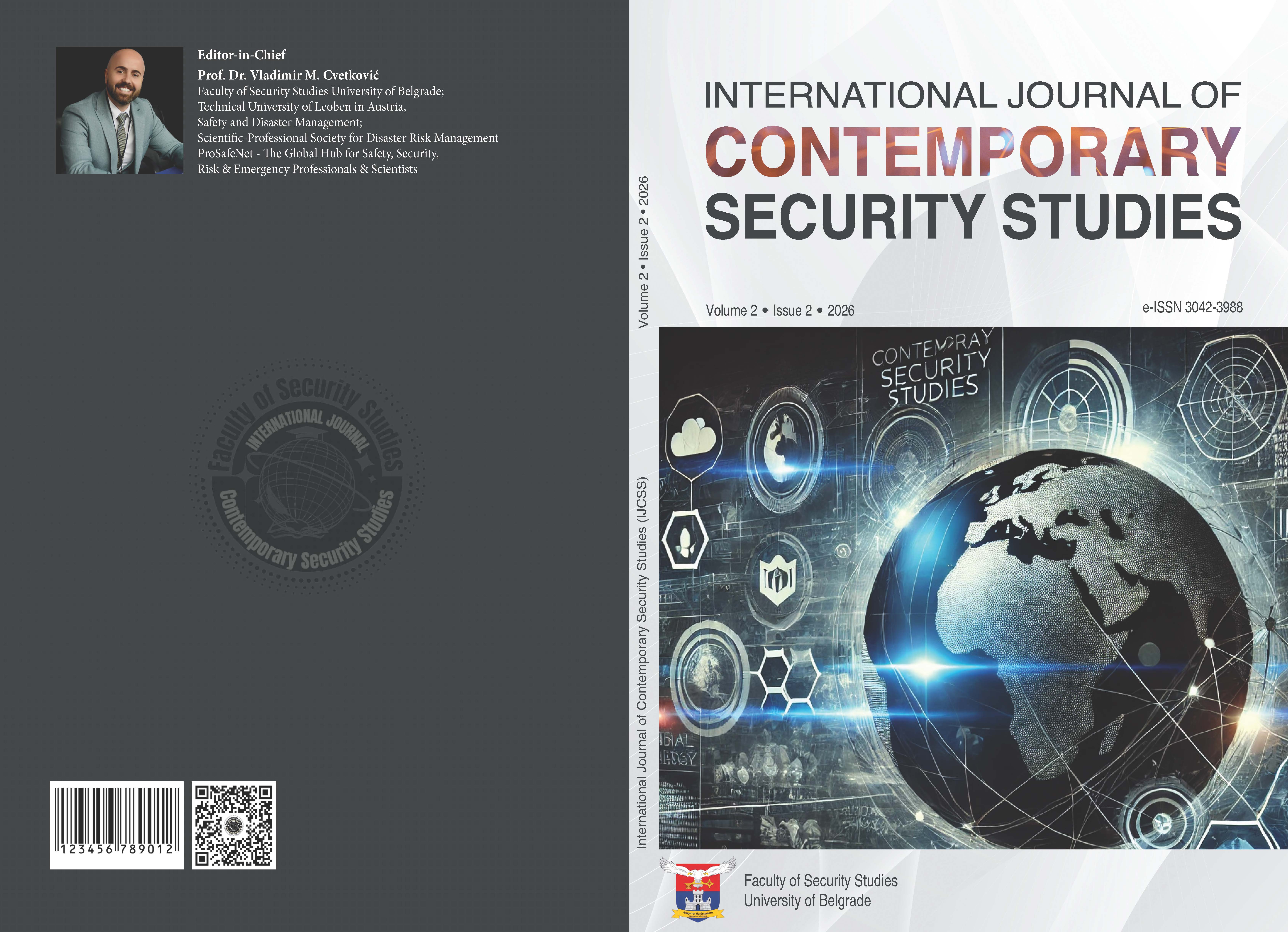
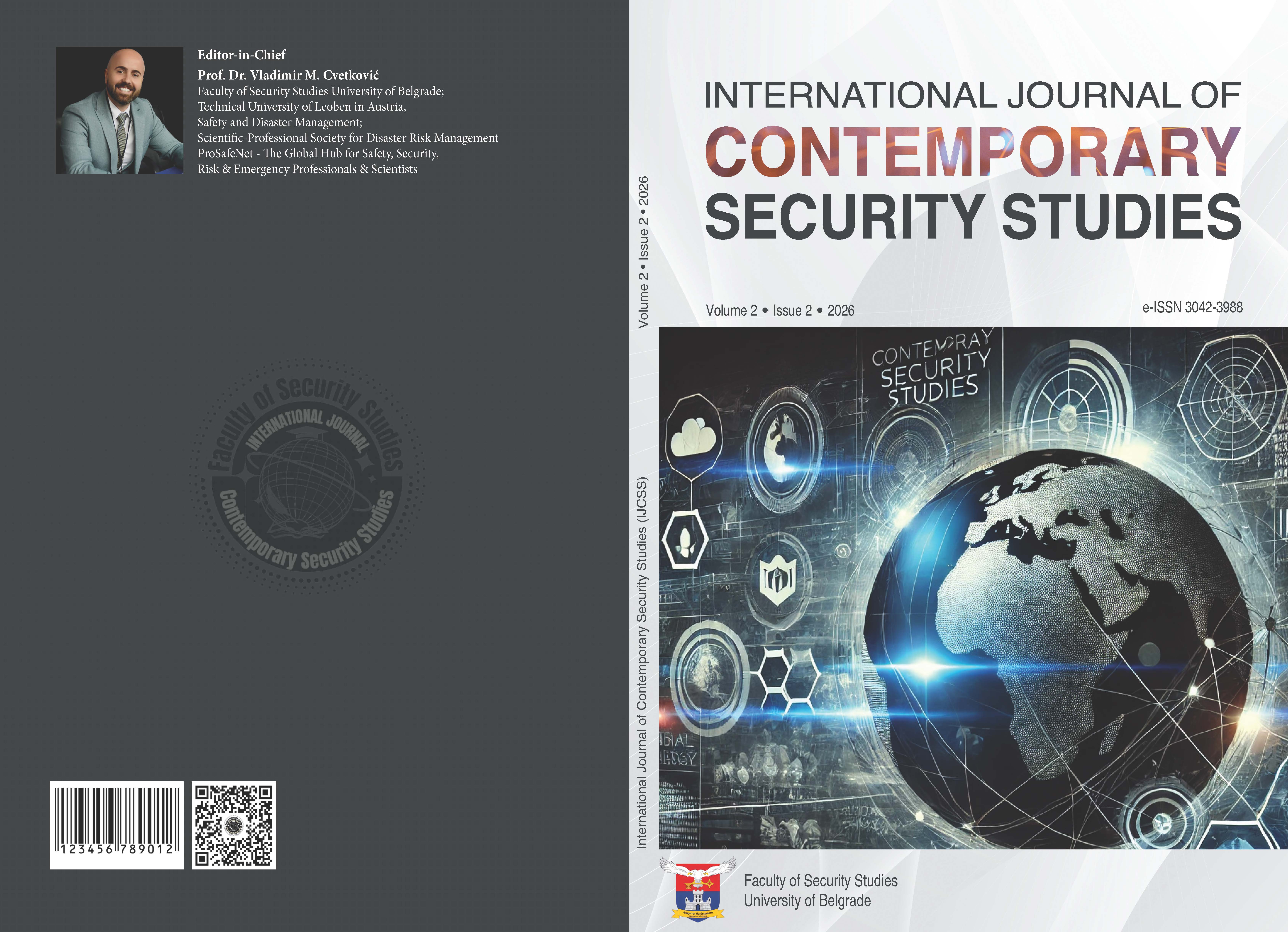
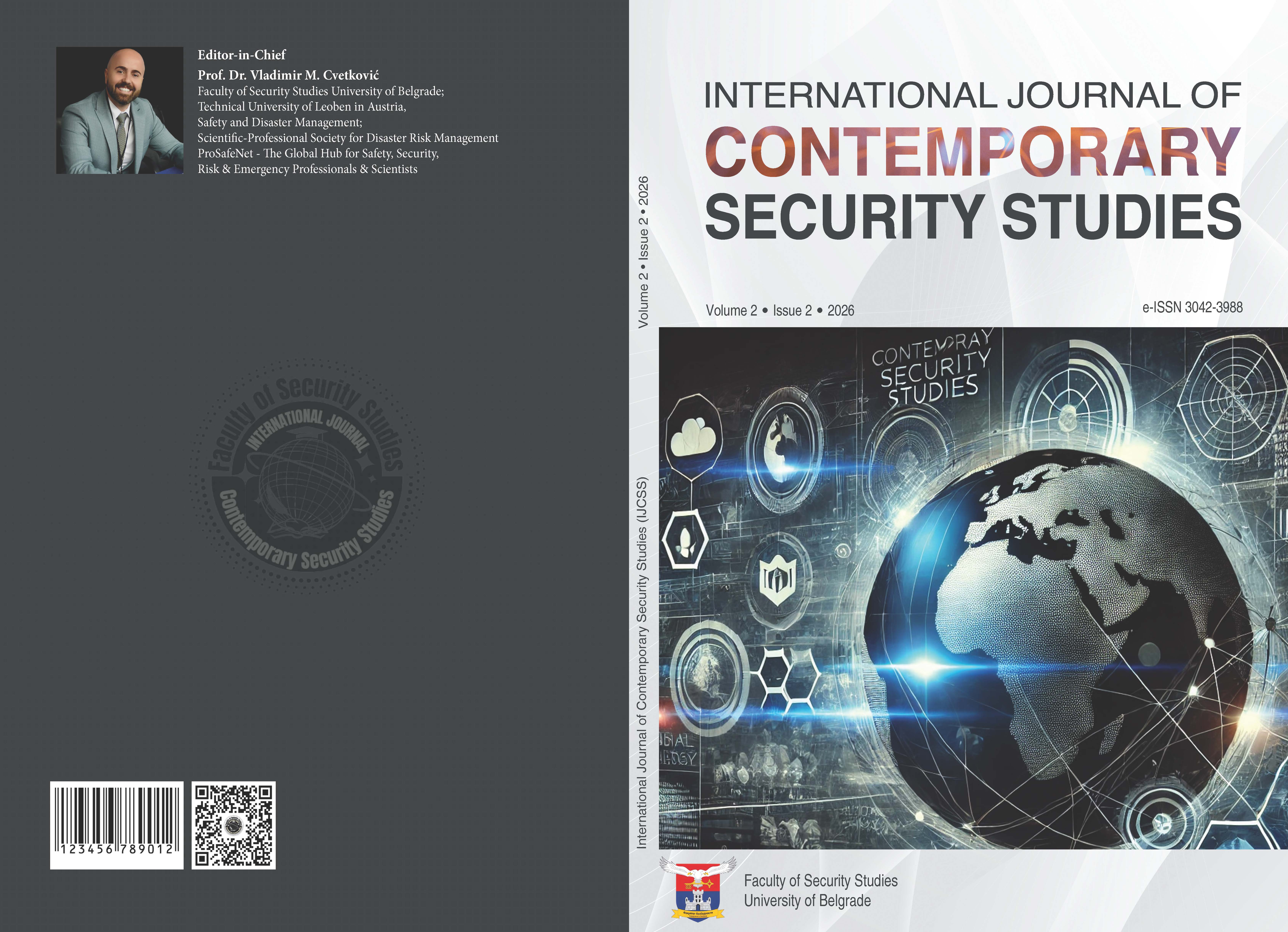
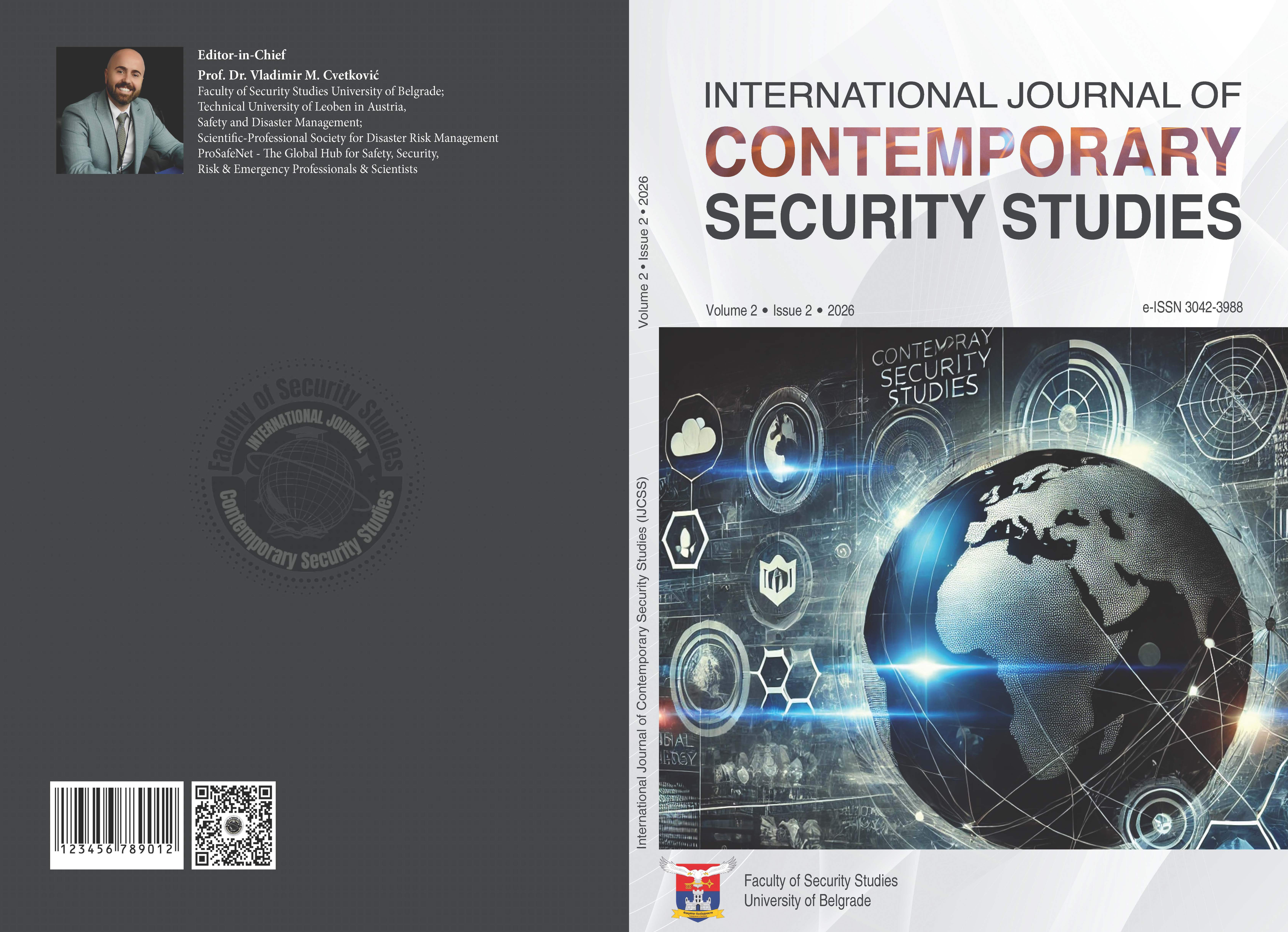
International Journal of Contemporary Security Studies

About the Journal

International Journal of Contemporary Security Studies (IJCSS) is a double-blind, peer-reviewed, open-access, international journal published twice a year. It serves as a platform for academics, policymakers, and practitioners to share high-quality research and practical insights on contemporary security issues. IJCSS explores a broad range of security topics, including but not limited to national security, cyber security, intelligence studies, counterterrorism, organized crime, geopolitical conflicts, hybrid threats, military strategy, crisis and emergency management, critical infrastructure protection, radicalization, border security, international relations, environmental security, fire safety, disaster risk reduction, nuclear, biological, and chemical security threats, transnational organized crime, migration and border control, space security, human security, public safety, and security governance. The journal also examines the intersection of technology, human rights, and security policy in an evolving global landscape. The publisher is the University of Belgrade, Faculty of Security Studies, Serbia. 

Announcements

New Issue Released: IJCSS, Vol. 1, No. 2

14.01.2026
The International Journal of Contemporary Security Studies (IJCSS), Vol. 1 No. 2 (2025) has been released by the Faculty of Security Studies, University of Belgrade, featuring 20 peer-reviewed scientific papers that demonstrate the journal’s strong international reach and scholarly impact under the leadership of the Editor-in-Chief, Prof. Dr. Vladimir M. Cvetković. This issue brings together authors from ten countries: China, Austria, Finland, Romania, India, Serbia, Nigeria, Egypt, and Bangladesh, offering diverse perspectives across contemporary security agendas. The contributions address a wide range of timely themes—school safety, nuclear policy, cybersecurity and critical infrastructure protection, border risk assessment, counterterrorism and insurgency dynamics, geopolitical and strategic studies, UN peacekeeping, and innovation in police work (SUAV)—reinforcing IJCSS as a platform for rigorous, internationally relevant research and practice-oriented insights. Read more about New Issue Released: IJCSS, Vol. 1, No. 2

Current Issue

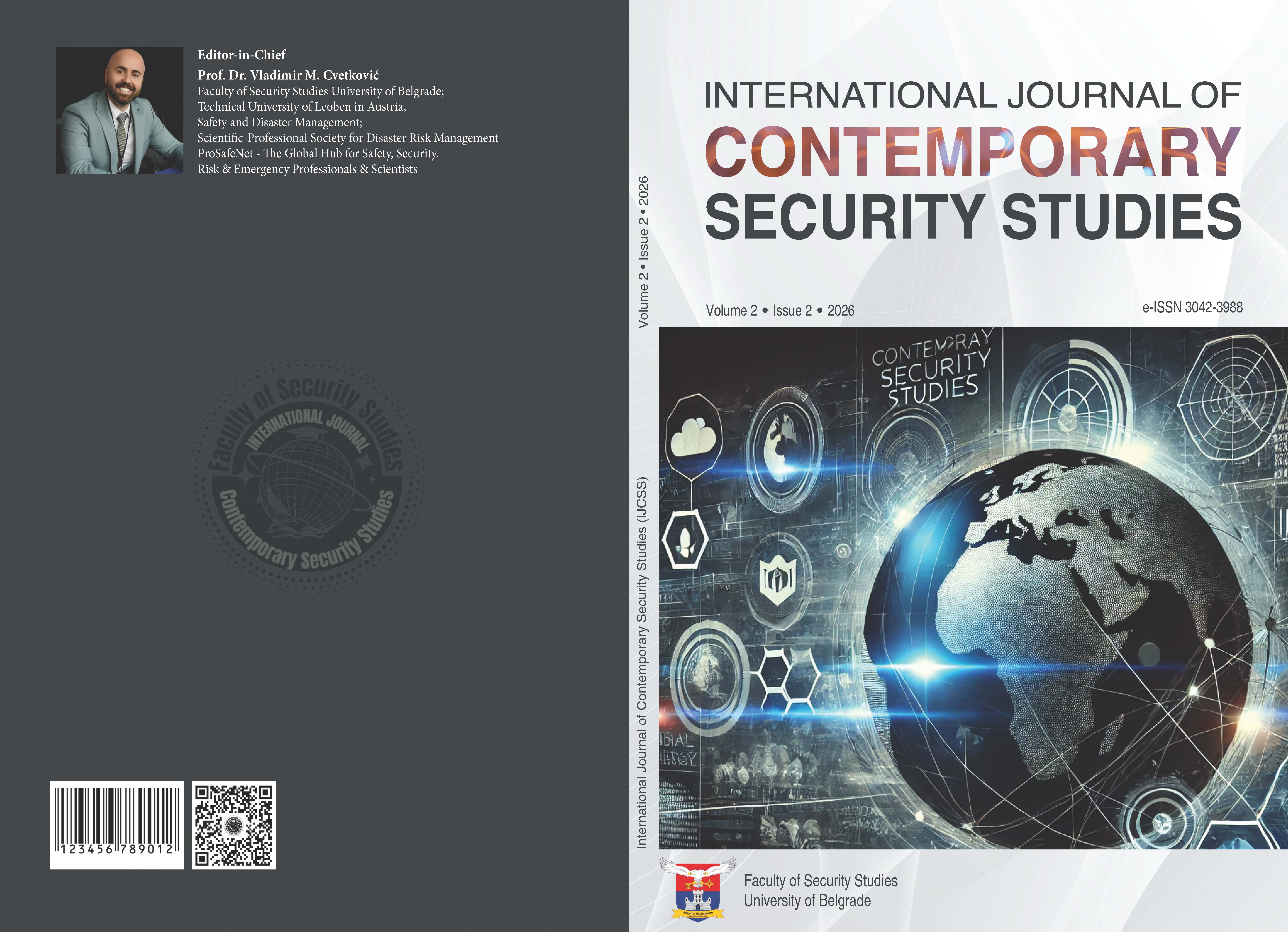
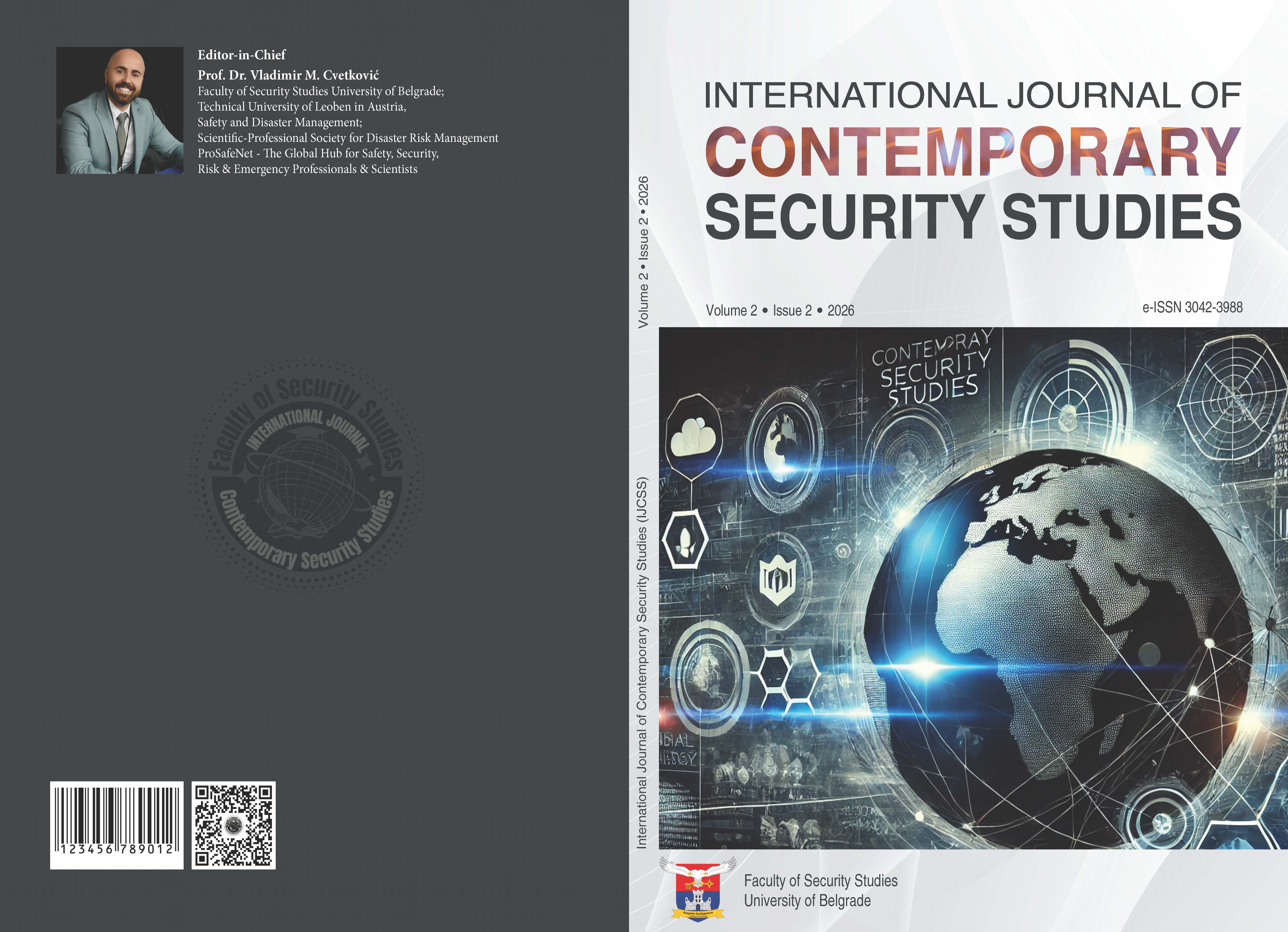
Vol. 2 No. 1 (2026): International Journal of Contemporary Security Studies
					View Vol. 2 No. 1 (2026): International Journal of Contemporary Security Studies

Published papers: The Balance of Power in Ukraine and Deterrence Effectiveness Against Nuclear-Armed Russia; Security Communication and the Security Dilemma: Insights from the Iran-Israel Rivalry; Multi-Actor Deterrence of Small States: The Case of the Republic of Serbia; United States–Republic of Korea Joint Nuclear Defense Guidelines: Evaluating Alliance Coordination Against the North Korean Threat; Occultism in Warfare and Espionage: An Unholy Alliance; Mexican Cartels and U.S. National Security: Between Criminal Economies and Securitization Discourses; Impact of Social Support in Reducing Anxiety and Depression of Women Exposed to Violent Conflicts in Plateau State, Nigeria; Oil, Militancy, and National Security: The Nexus in the Niger Delta; The Human Body War: A Strategic Analysis of Internal Conflict Dynamics within States; Internet Fraud, Human Trafficking, and the Youth Question in Warri Metropolis: An Integrated Empirical Analysis; Revolutionary Identity and Nuclear Bargaining: How Symbolic Legitimacy Restructures Utility in Iran’s Nuclear Program; Modern Technological Deficiencies in Criminal Investigation Architecture and National Security Crisis in FCT, Abuja; The Clash Between AI-Driven Education and Traditional Learning in Bangladesh: A Mixed-Methods Study of Academic Integrity and Educational Security in Sherpur Sadar Upazila; Conditional Hybrid Organization in Constrained Multipolarity: Middle Powers and System Stabilization in the 21st Century.

Published: 21.01.2026

International Journal of Contemporary Security Studies

View All Issues

Publisher

The Faculty of Security Studies is a higher education institution within the University of Belgrade. It belongs to the group of social sciences and humanities faculties. The Faculty’s curriculum encompasses interrelated sociological, political, legal, economic, ethical, psychological, humanitarian and other aspects of security, human and social resources, defence, civil protection and environmental protection. It offers undergraduate and postgraduate (master’s and doctoral) academic studies, specialist postgraduate studies as well as professional education and development in it core area – Security Studies. The Faculty conducts scholarly, applied and developmental research and has been accredited as an academic institution by the Ministry of Science and Environmental Protection of the Republic of Serbia. The Faculty of Security Studies is an autonomous member of the University of Belgrade, which provides education at all academic levels (undergraduate and postgraduate), organizes academic and professional conferences, and conducts research in the interdisciplinary field of Security Studies. The Faculty of Security Studies emerged from the Institute, later Section, for National Defence of the University of Belgrade’s Faculty of Science and Mathematics in the 1975/76 academic year. In October 1978, the Section separated from the Faculty of Science and Mathematics to become an independent institution – the Faculty of National Defence. To build on and keep abreast of the latest developments in defence, protection, and security, the Faculty’s curriculum was updated in the 1990/91 academic year, and the Faculty was renamed the Faculty of Defence and Protection of the University of Belgrade, and later the Faculty of Civil Defence. In May 2006, following extensive curriculum changes, the Faculty officially changed its name to the University of Belgrade – Faculty of Security Studies.